
UIN Jakarta Highlights the Role of Female Santri in Driving Social Change
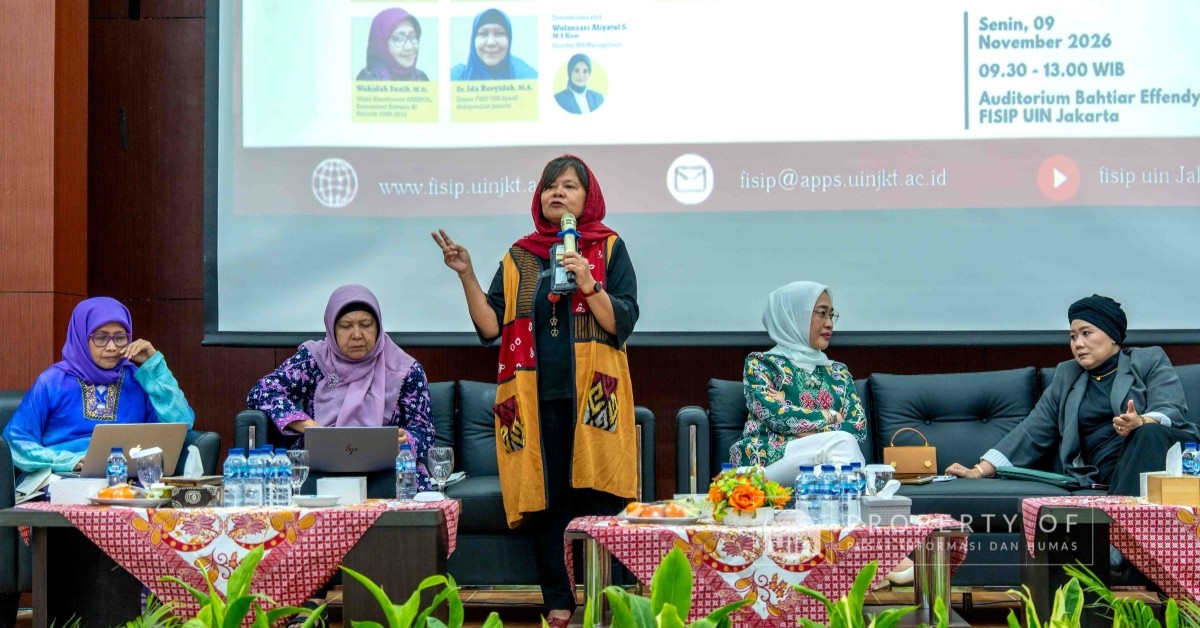
Bahtiar Effendy Auditorium, UIN News Online – The Faculty of Social and Political Sciences (FISIP) UIN Jakarta hosted a national seminar titled Women and Community Empowerment: From Pesantren to Social Change, highlighting the challenges of women's empowerment, gender equality, and the potential of female Islamic boarding school students (santri) to become agents of social transformation. The seminar was held at Bahtiar Effendy Auditorium on Monday (11/09/2026).
The event featured Indonesia's Coordinating Minister for Community Empowerment, Dr. (H.C.) Drs. A. Muhaimin Iskandar, M.Si., as the keynote speaker. Also in attendance were UIN Jakarta Vice Rector for Student Affairs Prof. Ali Munhanif, M.A., Ph.D.; FISIP Dean Prof. Dr. Dzuriyatun Toyibah, M.Si., M.A.; and Vice Dean for Student Affairs Dr. M. Zaki Mubarak, S.IP., M.Si., Ph.D.
The seminar also brought together five speakers: Dr. Hj. Anggia Ermarini, S.Pd., M.K.M.; Dr. Luluk Nur Hamidah, M.Si., M.P.A.; Yuniyanti Chuzaifah; Wahidah Suaib, M.Si.; and Dr. Ida Rosyidah, M.A. The discussion was moderated by Wulansari Aliyatul S., M.I.Kom., and attended by faculty members, students, alumni, and members of the public.
In his keynote address, Coordinating Minister Muhaimin Iskandar emphasized that women's empowerment must remain a central part of Indonesia's national development agenda. He argued that providing access to education alone is not enough. Meaningful empowerment also requires strengthening women's capacities, practical skills, and competencies in ways that respond to their specific needs and circumstances.
"Women's empowerment is one of the key priorities in national development," he stated.
Muhaimin further highlighted the strategic role of higher education institutions, including Islamic boarding schools (pesantren), in strengthening women's capabilities. He stressed that education should go beyond expanding access to knowledge and focus on developing the confidence, practical skills, and competencies women need to participate meaningfully in society.
"Empowerment through educational institutions, including pesantren, is not simply about providing affordable education. It is also about building mental resilience, practical skills, and adequate competencies that reflect women's particular circumstances and needs," he explained.
UIN Jakarta Vice Rector for Student Affairs Prof. Ali Munhanif also underscored the responsibility of universities to advance gender equality. He noted that higher education institutions must continue to provide spaces for critical discussion and raise awareness of women's contributions to broader social transformation.
"Gender equality is an issue we must continue to champion. It serves as an important reminder of the role women play and of the responsibility universities have in advancing social change," he said.
Offering a perspective on Islamic boarding school education, gender activist Ida Rosyidah highlighted the considerable potential of female santri to become catalysts for social change. She argued that the knowledge and values gained through pesantren education can provide a strong foundation for women to take on greater roles within their communities.
"Female santri across Indonesia have tremendous potential to become agents of social change," she remarked.
Ida further emphasized that the purpose of pesantren education should extend beyond producing individuals with strong religious and academic knowledge. It should also nurture leadership and encourage students to engage in social movements that create meaningful benefits for their communities and society at large.
"Santri should not only be educated to become knowledgeable individuals, but also to emerge as leaders of social movements who can bring about change within their own communities and beyond," she added.