
The Industry Will Not Control Our Education and We Must Fight for It
Muhammad Izzul Islam An Najmi
Lecturer at the Faculty of Ushuluddin at UIN Jakarta
Recently, a troubling discourse has emerged from Indonesia’s Ministry of Higher Education regarding the closure of academic programs deemed "irrelevant" to industrial needs. While this specific policy is a local Indonesian crisis, it reflects a global infection: the reduction of the human mind to a mere cog in the industrial machine.
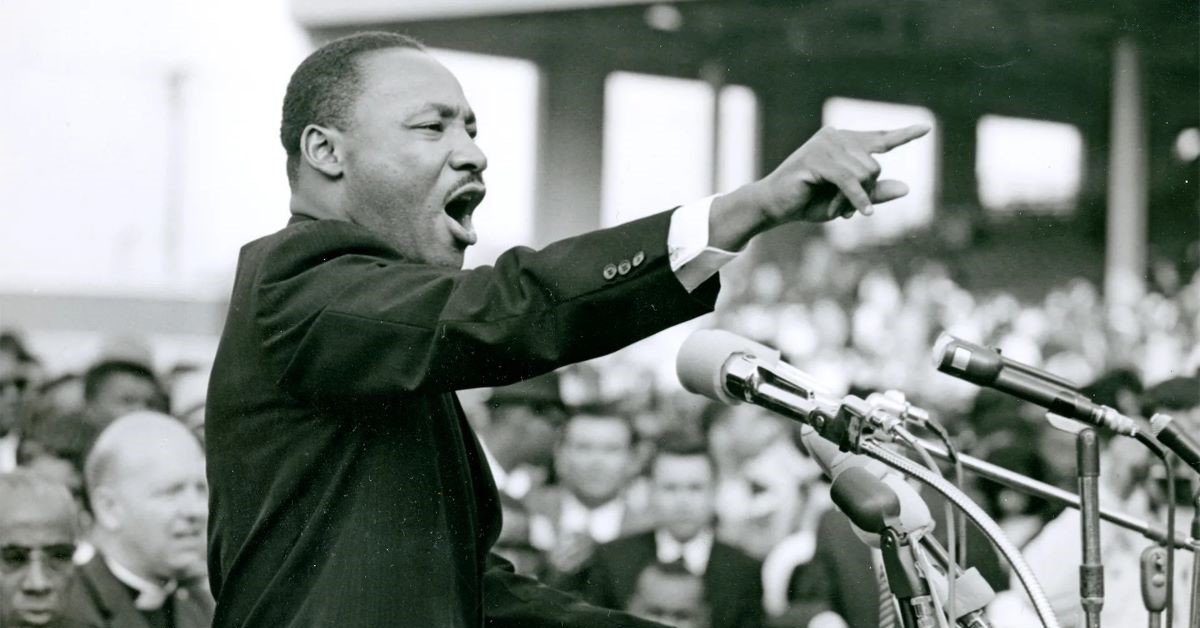
In America, we are seeing the same shadow, a relentless pressure to judge the value of a student by their starting salary rather than the depth of their soul. As Dr. Martin Luther King Jr. once warned, the goal of true education is not just utility, but "intelligence plus character." When we shutter the doors of philosophy or history because they don't produce a profit, we are not just failing a budget; we are failing humanity.
Knowledge Beyond the Marketplace
The history of human progress is not a ledger of industrial demands; it is a testament to the power of curiosity. Branches of knowledge like theology, linguistics, and pure mathematics did not flourish because a CEO demanded an invoice; they grew because humans hungered to understand the universe.
To measure the worth of a discipline only by its immediate commercial gain is to have a vision that is dangerously narrow. Much like the abstract math of the last century which became the foundation for today's digital security, the "impractical" knowledge of today is often the bedrock of tomorrow’s civilization. Science and the humanities are long-term investments in the liberation of the human race.
A University is Not a Job Factory
A campus must be more than a trade school; it must be a sanctuary for the mind. Dr. King famously argued that "the function of education is to teach one to think intensively and to think critically." If we allow universities to be oriented solely toward the whims of industry, we strip them of their intellectual responsibility.
We risk producing "skilled laborers" who lack the critical faculty to challenge social injustice or understand the cultural identities that bind us. Majors like literature, history, and anthropology are the guardians of our collective conscience. Not everything that counts can be counted on a corporate balance sheet.
The Moral Risk of a Market-Driven Mindset
When education bows to the logic of the market, we invite a catastrophic narrowing of the human experience. Industries are dynamic and fickle; what is in demand today may be obsolete in a decade. By shackling higher education to short-term trends, we create a system of "imposed ignorance," where:
-
Moral Imagination is Suffocated: Students are taught how to follow rules, not how to envision a better world.
-
The Critical Voice is Silenced: The university loses its role as the conscience of society.
-
Knowledge is Segregated: Only the "profitable" are allowed to learn, while the "impractical" are discarded.
When every thought must be economically relevant, we lose the very essence of freedom: the liberty of the mind to wander beyond the fence of the factory.
Ignorance Is Not a Bliss
Today, many public figures dismiss philosophy as a relic of the past because it does not build a bridge or code an app. This is a profound misunderstanding of how the world works. Technology does not exist without ethics; innovation does not survive without the logic provided by the humanities.
Our modern democracy and our laws are the children of philosophical tradition. To say philosophy is useless because industry does not "need" it is to ignore that the very foundation of industry was built by those who dared to ask why, not just how.
A Call for Intellectual Maturity
The ultimate measure of an education is not the size of the paycheck it produces, but the quality of the citizen it creates. As Dr. King taught us, intelligence alone is not enough; it must be tempered with the character to stand for truth. Higher education must remain a space where we protect the diversity of human thought.
We must reject the notion that a student is merely a product to be sold. As long as a discipline helps a human being understand the challenges of their era and the cries of their neighbor, it is relevant. Industry is a servant to society, not its master. Therefore, universities must be the place where that hierarchy is remembered.
"The function of education is to teach one to think intensively and to think critically. Intelligence plus character—that is the goal of true education." — Martin Luther King Jr.
This article was published in Kumparan on Sunday (2/5/2026). Photo: Britannica Encyclopedia