
Survival Economics in the Age of Global Disruption
Mohammad Nur Rianto Al Arif
Professor at UIN Jakarta
In the middle of global economic tremors from geopolitical instability to the relentless march of AI, Small and Medium Enterprises (SMEs) are once again at a historic crossroads. In the United States, we are seeing a fascinating shift: the rise of the "Micro-Entrepreneur."
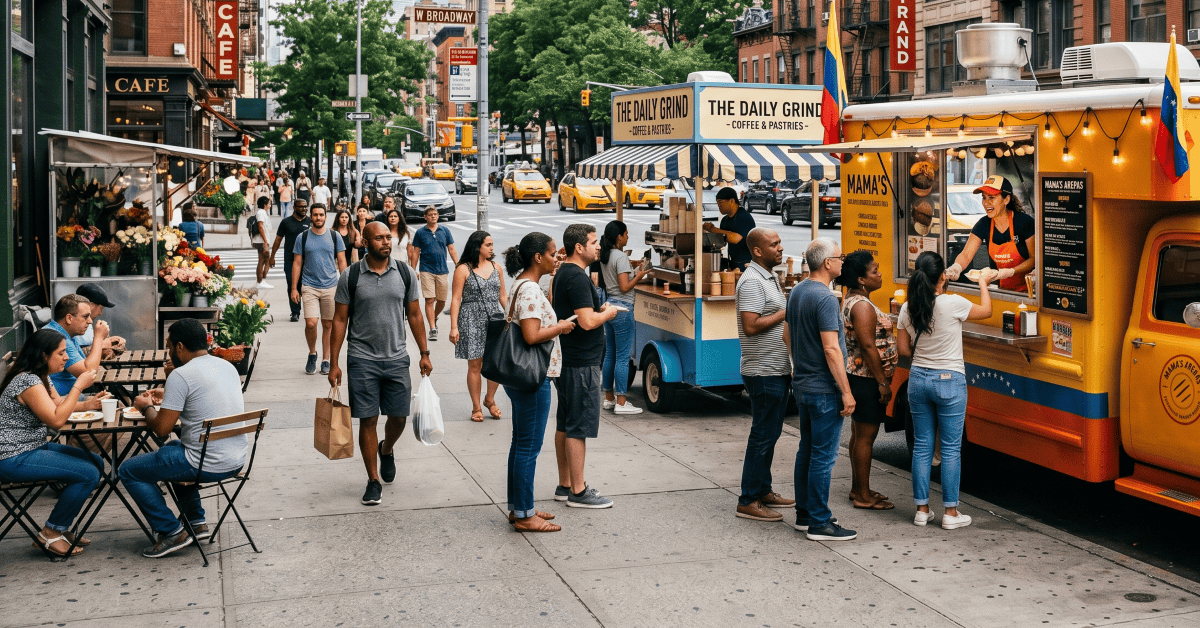
From the food truck on a street corner in Austin to the independent vendor in New York, these small players are no longer just a side hustle; they are becoming the foundation of a new American survivalism. As traditional restaurants buckle under the weight of skyrocketing commercial rents and a "tipping culture" that has reached a breaking point, the street vendor offers the ultimate antithesis: affordability without the hidden tax of a 25% tip.
Caught in the Crossfire of Global Disruption
The struggle of these small businesses is being intensified by massive external factors that are disrupting the entire global economic landscape. Geopolitical tensions, trade wars, and constant supply chain interruptions have driven up the costs of raw materials and energy, squeezing the profit margins of those who have the least room to maneuver.
These external shocks do not happen in a vacuum; they fundamentally change how production, distribution, and consumption function. For the small vendor, a conflict in the Middle East or a policy shift in a distant manufacturing hub isn't just news; it’s a direct hit to their daily survival, forcing them to navigate a world where the rules of the game change overnight.
The Paradox of the Micro-Scale
The data reflects a massive structural reality. Just as in Indonesia, where over 65 million SMEs support the national pulse, the U.S. economy is increasingly propped up by small businesses that account for nearly half of the private-sector workforce. But behind these impressive numbers lies a paradox: while they are numerous, they are incredibly fragile.
Over 99% of these businesses are "micro-enterprises," operating with minimal cushions against economic shocks. They are not just businesses; they are "subsistence enterprises," existing to pay today’s bills rather than to fund tomorrow’s expansion.
Digitalization: The Trap of the Platform
Disruption today is not gradual; it is exponential. For the small vendor, technology is a double-edged sword. On one hand, digital tools offer access to a global market. On the other, they create a "race to the bottom." When a local artisan joins a massive e-commerce platform, they aren't just competing with the shop next door—they are competing with global products subsidized by low-cost labor and aggressive algorithms.
Digitalization often becomes a trap where the small business owner is forced into price wars that bleed their profit margins dry. In 2026, being "online" is no longer a solution; it becomes a high-stakes battlefield.
The Productivity Trap and the "Tipping Fatigue" Advantage
If there is a single factor that will determine the future of these small players, it is productivity. For too long, we have praised small businesses for their "resilience" while ignoring their stagnation. However, in the U.S. market, these micro-vendors have found a unique "productivity hack": The Anti-Service Model.
By cutting out the overhead of a formal dining room and the social pressure of the tipping system, street vendors can offer high-quality products at a fraction of the price. In an era of "tipping fatigue," the customer is flocking to the vendor who provides an honest transaction—food for money, no strings attached.
Three Scenarios for a Fragmented Future
As we look ahead, the future of the small entrepreneur falls into three distinct scenarios:
-
The Optimist: Small businesses successfully adapt through inclusive digitalization and smart scaling, becoming hubs of local innovation.
-
The Moderate: They remain the "backbone" but stay stagnant while absorbing labor but providing low wages and zero growth, essentially acting as a permanent shock absorber for a broken system.
-
The Pessimist: The "Small Business" is erased by global platforms and AI-driven corporations, leading to a massive spike in economic inequality.
A Strategic Shift
We can no longer afford to treat small businesses with conventional, romanticized sentimentality. We need a structural transformation. First, the focus must shift from the quantity of businesses to the quality of their productivity. Second, digitalization must be a tool for strategy, not just a box to check. Third, we need policy reforms that actually support "scaling up" rather than just keeping people in a state of perpetual micro-survival.
The American micro-entrepreneur is at a tipping point. They have the potential to win in this era of disruption, but only if they are supported by an ecosystem that values their humanity over their data. The future of the global economy doesn't just depend on the giants of Wall Street; it depends on the survival of the vendor on the corner, fighting to keep the dream alive in a world that has made it harder than ever to just stand still.
This article was published in Kompas on Monday (04/05/2026).