
Strengthening Employee Representation, Freedom of Association, and Labour Rights at UIN Jakarta
Syarif Hidayatullah State Islamic University Jakarta recognises that respect for employee rights, professional representation, and opportunities for workers to express their interests are important foundations of decent work and responsible institutional governance. As a public higher education institution, the University employs academic and administrative personnel under different employment arrangements. Protecting employees' professional rights and providing opportunities for participation in recognised organisations are therefore relevant to maintaining a fair, accountable, and supportive working environment.
During 2024–2025, UIN Jakarta maintained an institutional employee ethics policy recognising freedom of responsible expression and participation in professional organisations. The University also participated in activities involving the Indonesian Civil Servants Corps (KORPRI), reflecting its engagement with recognised professional representation structures. These arrangements operate within Indonesia's national labour and civil service legal frameworks, which address freedom of association, professional representation, and collective bargaining according to the applicable categories of employment. Together, these measures provide a documented foundation for promoting employee participation and strengthening labour rights under Sustainable Development Goal 8: Decent Work and Economic Growth.
1. Recognising Employee Rights through Institutional Regulations
An important institutional foundation is Rector's Decree Number 737 of 2021 concerning the Employee Code of Ethics of Syarif Hidayatullah State Islamic University Jakarta. The decree establishes employees' professional rights and responsibilities within the University. Article 1 identifies the scope of the regulation as University employees holding civil servant and non-civil servant status. The regulation therefore provides an institutional framework addressing different categories of personnel rather than limiting its provisions exclusively to civil servants.
Article 4, Paragraph 1(f) recognises employees' right to express opinions freely, respectfully, peacefully, and responsibly while respecting the rights of others.
Article 4, Paragraph 1(k) recognises employees' right to participate in professional and scholarly institutions or organisations.
The same article also addresses rights relating to remuneration, professional development, legal protection, welfare facilities, and career advancement. These provisions demonstrate that UIN Jakarta maintains written institutional recognition of employee expression and professional association participation. Such rights contribute to an environment in which employees can participate in professional activities, exchange views, and develop collective professional interests. However, the regulation specifically recognises professional and scholarly organisations. It does not explicitly establish an independent trade union recognition policy or a procedure for collective bargaining over employment conditions.
2. Supporting Freedom of Association under Indonesia's National Legal Framework
Indonesia has established national commitments concerning freedom of association through its participation in international labour conventions. Presidential Decree Number 83 of 1998 ratified International Labour Organization Convention Number 87 concerning Freedom of Association and Protection of the Right to Organise.
The convention recognises the importance of protecting workers' and employers' rights to establish and participate in organisations of their own choosing, subject to the relevant legal framework. Indonesia subsequently established Law Number 21 of 2000 concerning Trade Unions, which regulates the establishment, membership, registration, and activities of trade unions. The legislation recognises the role of worker organisations in representing employee interests and promoting employment welfare.
It also establishes provisions addressing protection from interference with lawful union activities and participation. These national legal arrangements provide an important framework for recognising freedom of association in Indonesia. Their application within UIN Jakarta must, however, be evaluated according to the employment status and applicable regulations of different personnel categories. In particular, the legal arrangements governing civil servants are not necessarily identical to those applying to workers employed under general labour legislation.
3. Recognising Collective Bargaining within the National Labour Framework
Collective bargaining is an important mechanism through which workers and employers can negotiate employment conditions and seek agreements concerning their mutual responsibilities. Indonesia ratified ILO Convention Number 98 concerning the Right to Organise and Collective Bargaining through Law Number 18 of 1956. The convention promotes protection against anti-union discrimination and encourages voluntary negotiations between employers and workers' organisations concerning employment conditions. Indonesia's labour legislation also establishes mechanisms for collective agreements.
Law Number 21 of 2000 identifies the role of registered trade unions in representing workers and participating in the negotiation of collective agreements.
Law Number 13 of 2003 concerning Manpower, as amended, includes provisions concerning collective labour agreements negotiated between employers and eligible trade union representatives.
These arrangements provide a national framework for collective bargaining in employment relationships falling within their legal scope. For a public university with different employment categories, the distinction between general labour law and the civil service framework is particularly important. The national regulations provide relevant legal protections, but they do not independently establish that UIN Jakarta negotiated a collective agreement with employee representatives during 2024–2025. No such University-level collective bargaining agreement has been verified in the reviewed documentation.
4. Recognising Professional Representation within the State Civil Apparatus
For employees holding State Civil Apparatus status, professional representation is also recognised through Law Number 20 of 2023 concerning the State Civil Apparatus. Article 62 establishes the framework for professional organisations of State Civil Apparatus personnel.
The regulation identifies functions including professional development, legal protection, employee advocacy, welfare improvement, and the promotion of employee interests in public-sector governance. It also recognises the role of professional organisations in supporting fairness and improving the working environment. These provisions demonstrate that professional representation is formally recognised within Indonesia's civil service system. For eligible academic and administrative personnel at UIN Jakarta, this framework supports participation in recognised public-sector professional organisations.
The legal framework also distinguishes professional representation from the separate industrial relations mechanisms used for collective bargaining in employment relationships governed by general labour law. Consequently, recognition of a professional organisation should not automatically be treated as evidence of collective bargaining rights.
5. Demonstrating Institutional Participation in KORPRI Activities during 2025
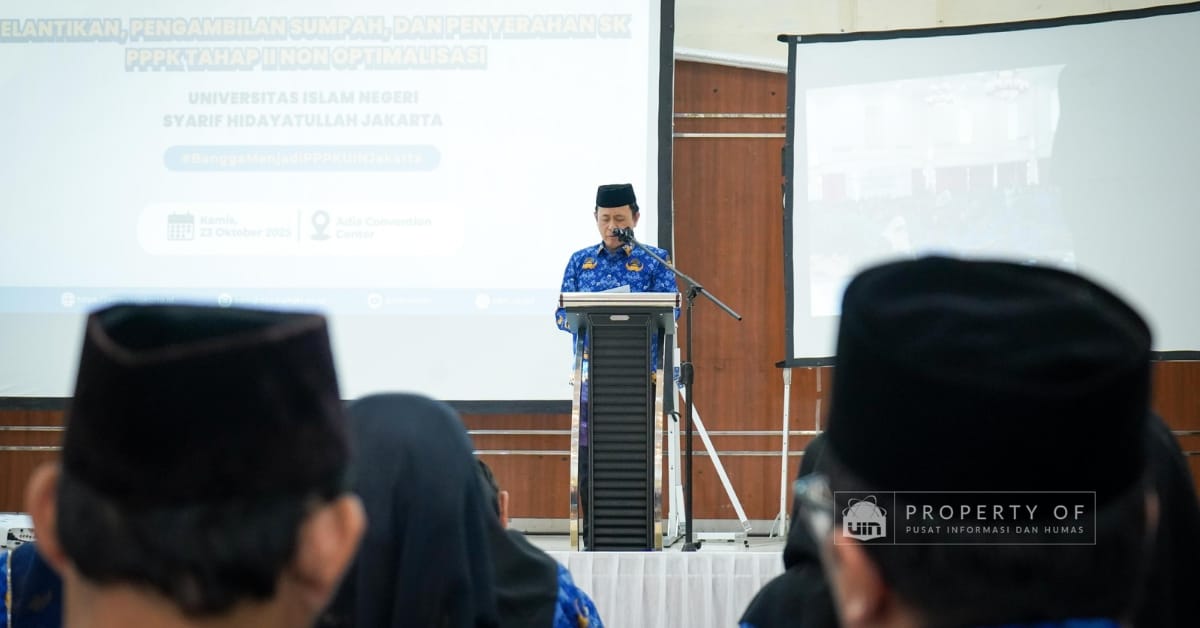
UIN Jakarta's participation in recognised public-sector professional organisation activities was publicly documented on 23 October 2025. On that date, the University collaborated with Indonesia's Ministry of Religious Affairs in activities involving the appointment of Government Employees with Employment Agreements and the inauguration of the KORPRI governing board within the Ministry.
The programme took place at the Adia Convention Center and was attended by University representatives and personnel participating in the appointment process. The University's Vice-Rector for General Administration highlighted the importance of public service and the contribution of newly appointed personnel to institutional development. The activities demonstrated UIN Jakarta's engagement with the recognised professional representation system for Indonesian public servants.
The October 2025 event provides direct institutional evidence of UIN Jakarta's participation in KORPRI-related professional organisation activities. KORPRI's functions are relevant to professional solidarity, employee welfare, and the development of public-sector personnel. However, participation in KORPRI activities does not independently establish the existence of an independent trade union at UIN Jakarta or demonstrate that the University has implemented a collective bargaining agreement.
6. Supporting Employee Expression and Professional Participation
The University's Employee Code of Ethics recognises that employees have rights extending beyond their immediate work assignments. These include professional development, responsible expression, legal assistance, and participation in professional organisations.
The recognition of these rights contributes to the development of an academic and professional environment where employees can participate in activities associated with their expertise and institutional responsibilities. For lecturers, professional associations may provide opportunities to exchange academic knowledge, develop professional standards, and strengthen cooperation. For administrative employees, relevant professional organisations can support professional development and shared interests concerning public service.
These forms of participation are valuable components of employee representation. Nevertheless, professional development activities and opportunities to express opinions should be distinguished from the formal right to negotiate employment conditions collectively. The available University documentation does not yet identify a dedicated collective bargaining mechanism through which employee representatives negotiate salaries, allowances, employment contracts, or other employment conditions with University management.
7. Strengthening Inclusive Labour Rights for Different Employment Categories
Inclusive labour rights require attention to the different circumstances of employees working within the same institution. UIN Jakarta's Employee Code of Ethics identifies its coverage in terms of civil servant and non-civil servant employment status.
This provides a documented foundation for professional organisation participation among employees within the regulation's scope. The national trade union framework also recognises principles of non-discrimination in lawful worker organisation membership.
However, the available University documents do not explicitly establish a comprehensive institutional guarantee of trade union recognition and collective bargaining for all employee categories. In particular, further documentation is needed to clarify the position of international employees, workers employed under different contracts, and other personnel who may be subject to distinct legal arrangements. A comprehensive institutional policy would need to specify the relevant rights and mechanisms applicable to these groups. It should also explain how employees can obtain information concerning representative organisations, submit collective concerns, and exercise their lawful employment rights without prohibited interference. Such arrangements would strengthen clarity and accountability across the University's employment system.
8. Strengthening Institutional Documentation of Labour Rights
The reviewed evidence establishes a foundation for employee professional participation, but further documentation is necessary to demonstrate comprehensive recognition of labour rights. Relevant evidence would include a formal University policy recognising freedom of association within applicable employment laws, written procedures for employee representation, and documentation concerning collective negotiation where legally available.
Where employees are represented by trade unions or other eligible bodies, institutional documentation could explain the respective roles and procedures for engaging with University management. Such documents could address the representation of employees in discussions concerning remuneration, employment conditions, welfare, workplace safety, and professional development.
Evidence should also clarify the inclusion of women and international personnel within the relevant legal scope. The reviewed records for 2024–2025 do not yet demonstrate that all of these requirements have been formally implemented across the University.
9. Contribution to SDG 8: Decent Work and Economic Growth
Syarif Hidayatullah State Islamic University Jakarta has established written institutional provisions recognising employees' right to express professional opinions and participate in professional and scholarly organisations. Rector's Decree Number 737 of 2021 provides the principal institutional foundation for these rights.
Indonesia's national legal framework recognises freedom of association, professional organisations, and collective bargaining within their respective employment contexts. The University's participation in the October 2025 KORPRI governing board inauguration provides additional evidence of institutional engagement with recognised professional organisation activities.
Together, these measures demonstrate that UIN Jakarta maintains formal recognition of professional association participation and supports employee representation within the applicable public-sector framework. Nevertheless, evidence of University-wide collective bargaining rights, explicit coverage for international personnel, and relevant agreements or negotiation procedures remains incomplete. Strengthening these areas would reinforce the University's contribution to equitable labour practices, accountable employment governance, and Sustainable Development Goal 8: Decent Work and Economic Growth.
Source :
https://asset.uinjkt.ac.id/uploads/TkyZgnBj/2025/10/737-pedoman-kode-etik-pegawai.pdf
https://www.uinjkt.ac.id/id/uin-jakarta-gelar-pengukuhan-dewan-pengurus-korpri-dan-penyerahan-surat-keputusan-menteri-agama-guru-besar-rumpun-ilmu-agama
https://jdih.kemnaker.go.id/peraturan/detail/2400
https://jdih.kemnaker.go.id/peraturan/detail/111/keputusan-presiden-nomor-83-tahun-1998
https://jdih.kemnaker.go.id/peraturan/detail/53/undang-undang-nomor-18-tahun-1956
https://jdih.kemnaker.go.id/peraturan/detail/32/undang-undang-nomor-21-tahun-2000