Religious Universities Must Adapt to Changing Times Without Compromising Islamic Principles, Says Religious Affairs Minister at AICIS+ 2026
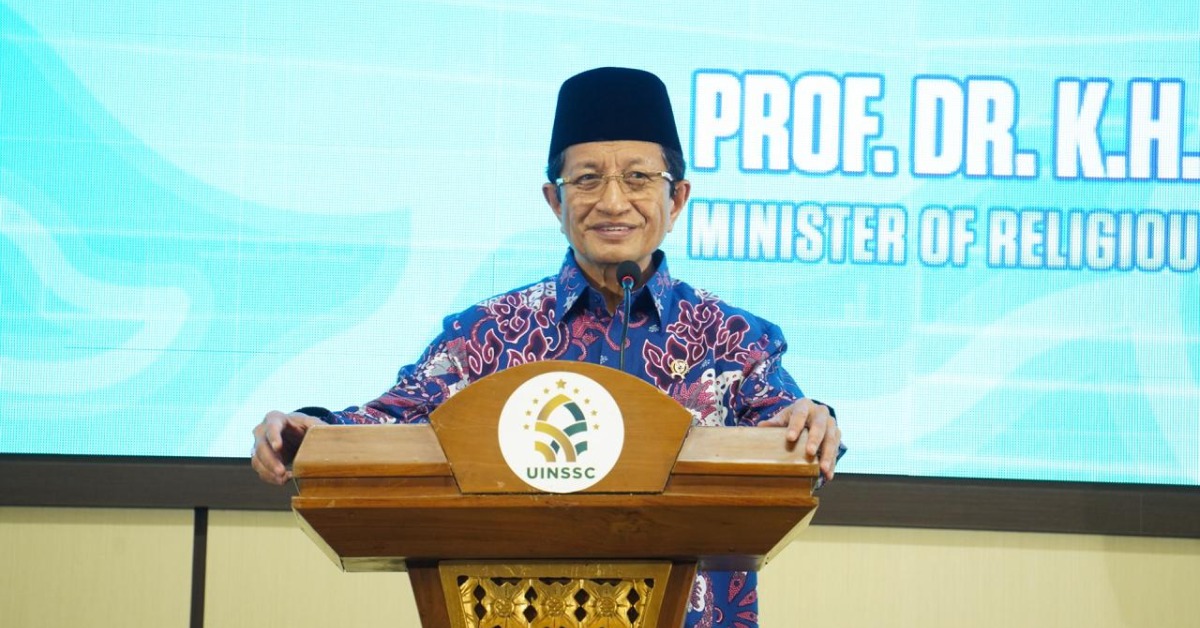
Cirebon, UIN Online News— Indonesia’s Minister of Religious Affairs, Prof. Dr. K.H. Nasaruddin Umar, M.A., has warned that future generations will no longer necessarily embrace religion simply because of parental or family inheritance. Instead, religious affiliation is increasingly becoming an autonomous individual choice amid the emergence of a religious marketplace. In response to this sociological shift, State Islamic Religious Universities (PTKIN) must be agile in understanding the needs of the times without compromising the fundamental principles of Islamic law (Sharia).
The Minister made these remarks while officially opening the 25th Annual International Conference on Islam, Science, and Society (AICIS+ 2026) at the campus of Universitas Islam Negeri (UIN) Siber Syekh Nurjati Cirebon on Tuesday (November 17, 2026). This year’s annual international conference, organized by the Ministry of Religious Affairs, carries the theme “Revitalizing Islamic Civilization for Sustainable Life: Local Heritage, Technological Innovation, and Human Flourishing.”
Minister Nasaruddin explained that increasing global mobility and the openness of digital information have made modern society’s approach to religion increasingly resemble a free-market system. If curricula and teaching methods at PTKIN and Islamic boarding schools (pesantren) remain rigid and conventional, religious educational institutions risk losing younger generations, who can now access global religious literature instantly through artificial intelligence (AI).
“Going forward, PTKIN management must be able to understand market dynamics and workforce needs, including addressing the challenges of graduate employability across various sectors. However, we must firmly distinguish between methodological aspects that may adapt to market demands and the fundamental principles of Sharia, which must never be abandoned,” he said.
The Minister highlighted the importance of preserving the academic integrity of Sharia faculties, particularly in the fields of Islamic commercial jurisprudence (Fiqh Muamalah) and Islamic economics and banking. He cautioned that adapting to the modern financial industry must not come at the expense of the essence of the Qur’an and the fundamental concepts of Islamic commercial jurisprudence.
“We must not allow Islamic economics and banking to abandon their fundamental principles and Sharia terminology merely to follow the preferences of the free market, ultimately becoming secular economic systems simply branded as Islamic. The responsibility of PTKIN lecturers and scholars is to preserve the substantive integrity of religion while presenting it in a way that is excellent and competitive,” he added.
Furthermore, the Minister challenged academics attending AICIS+ 2026 to actively contextualize Islamic jurisprudence in response to rapid advances in science and technology. He illustrated how modern technological interventions have transformed geographical conditions and the 'illah (effective legal cause) underlying certain classical Islamic legal rulings.
“In the past, in barren desert regions, water scarcity provided the context for applying the concession of tayammum, using sand as a means of purification from major ritual impurity. Today, satellite-based weather modification technology, or cloud seeding, can guide clouds and produce rainfall even in the middle of a desert. Such changes in reality brought about by science demand fresh ijtihad and renewed academic perspectives from Islamic universities,” the Minister explained.
To address these challenges, Minister Nasaruddin called on PTKIN academic communities to embrace the spirit of interfaith scientific collaboration exemplified during the golden age of Bayt al-Hikmah, when Muslim scholars worked alongside Jewish, Christian, Hindu, Buddhist, and Zoroastrian intellectuals.
He also encouraged PTKIN to become driving forces behind Indonesia’s major ideas for the world, including mainstreaming Ecotheology as a follow-up to the Istiqlal Declaration, implementing the Curriculum of Love (Kurikulum Cinta), and advancing Religious Diplomacy as a means of contributing to global peace.
Director General of Islamic Education Explains the Transformation of AICIS+
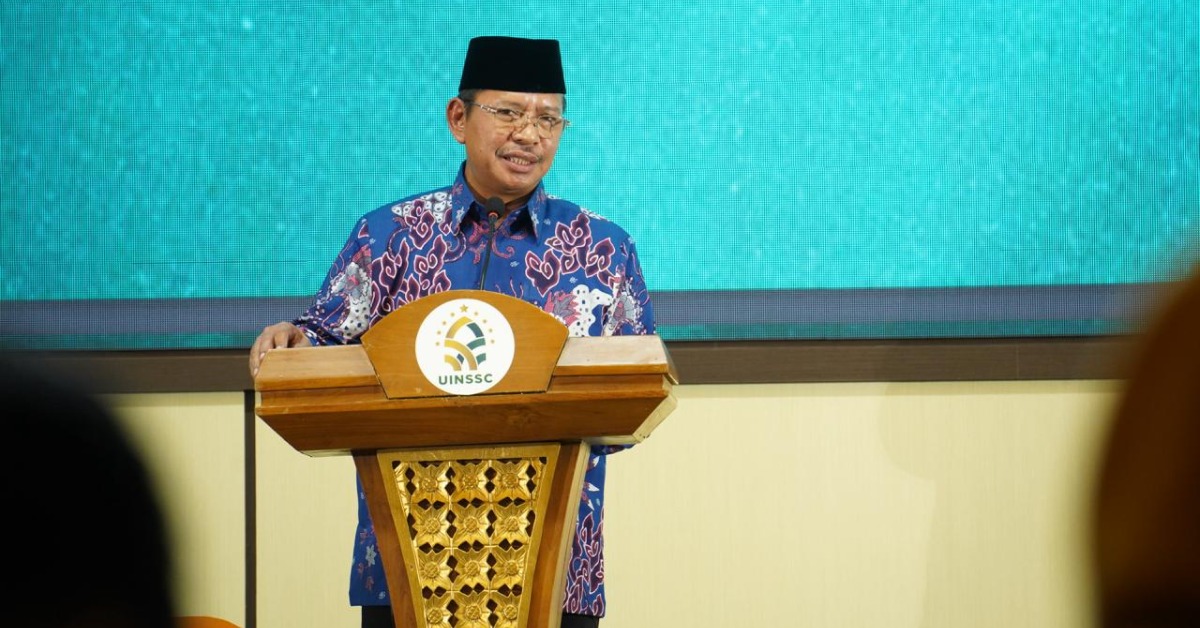
In line with the Minister’s direction, Director General of Islamic Education Prof. Dr. Amien Suyitno, M.A., explained that the transformation of AICIS into AICIS+ was specifically designed to bring Islamic studies into closer dialogue with science and society.
“The ‘Plus’ in AICIS+ underscores that Islamic studies must no longer remain confined to theoretical discussions in academic ivory towers. Instead, they must translate into impactful research that responds to challenges related to ecotheology and humanity. This year, we have also expanded interdisciplinary collaboration through a series of pre-conference activities with general universities under the Ministry of Higher Education, Science, and Technology, including Universitas Negeri Jakarta, Universitas Gadjah Mada, and Universitas Indonesia,” he explained.
Director General Suyitno added that PTKIN’s readiness to address global challenges and changing societal demands is reflected in their growing international recognition. A total of 140 study programs across Islamic higher education institutions have received international accreditation.
“Despite limited budgets, the research capabilities and scholarly publications of PTKIN lecturers in reputable journals have helped UIN Sunan Kalijaga Yogyakarta achieve second place among Indonesia’s best universities according to the Times Higher Education World University Rankings (THE WUR). At the same time, UIN Syarif Hidayatullah Jakarta ranked first nationally and 29th globally in Theology, Divinity, and Religious Studies in the QS World University Rankings by Subject 2026, surpassing Leiden University. Meanwhile, UIN Ar-Raniry Banda Aceh ranked first nationally among research universities in the SCImago Institutions Rankings (SIR) 2026,” he stated.
The Director General also commended the transformation undertaken by UIN Siber Syekh Nurjati Cirebon as the host of the 25th AICIS+ conference. As Indonesia’s first Cyber Islamic University, the institution was recognized for developing a digital library ecosystem and fostering an academic culture of learning, unlearning, and relearning to meet the needs of today's generations.
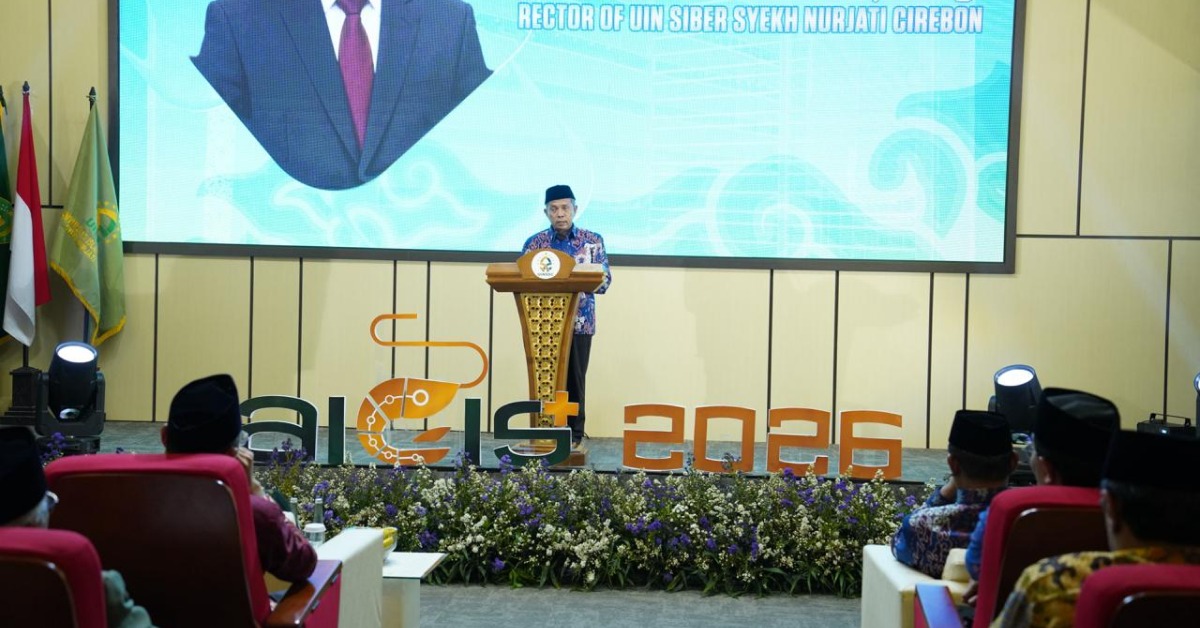
Meanwhile, Rector of UIN Siber Syekh Nurjati Cirebon, Aan Jaelani, said that hosting AICIS+ 2026 in Cirebon represents a strategic opportunity to bring together the wisdom of local heritage and technological innovation in advancing human civilization.
“Cirebon is a historic city where Islamic values, the scholarly traditions of pesantren, and the cultural diversity of the Indonesian archipelago intertwine in harmony. Through AICIS+ 2026, we hope that every paper, academic discussion, publication, and policy outlook developed by scholars will make a tangible contribution—from Cirebon to Indonesia, and from Indonesia to humanity,” Aan said.
The opening ceremony of AICIS+ 2026 was attended by the Advisor and members of the Ministry of Religious Affairs’ Dharma Wanita Persatuan, the Secretary General and senior officials of the Ministry of Religious Affairs, the Director General of Science and Technology at the Ministry of Higher Education, Science, and Technology, Special Advisors and Expert Staff to the Minister of Religious Affairs, the Director of Islamic Higher Education, rectors of PTKIN institutions from across Indonesia, kiai and leaders of Islamic boarding schools throughout the Ciayumajakuning region, as well as conference speakers and delegates from various countries.
(Ministry of Religious Affairs Press Release/Zm)