Minimizing alteration of aquatic ecosystems (plan) Have a plan to minimise physical, chemical and biological alterations of related aquatic ecosystems
The Faculty of Health Sciences (FIKES) disposed of 0.22125 tons (221.25 kg) of B3 (infectious and toxic) waste from laboratory and research activities. This management plan aims to minimize physical, chemical, and biological changes to the environment and aquatic ecosystems.
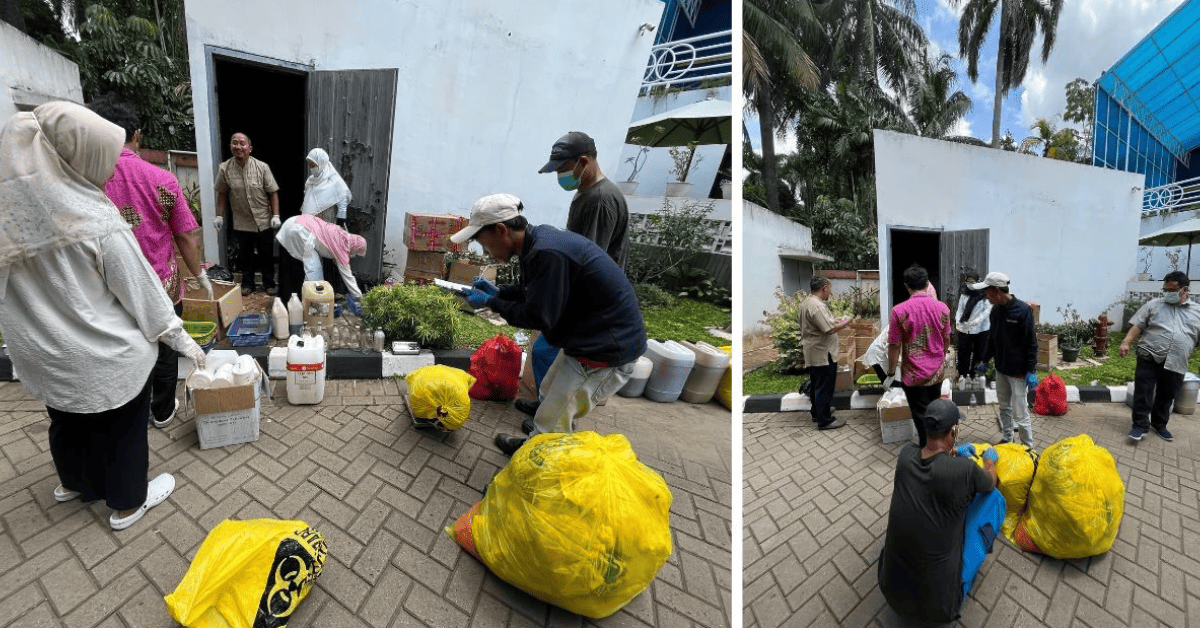
The hazardous waste (B3) disposed of consists of residues from laboratory experiments and research, used packaging, and expired chemicals. This waste is both infectious and toxic. Previously, hazardous waste (B3) generated by each laboratory was stored in labeled temporary storage areas. Once storage capacity reached its maximum limit, the hazardous waste was transported and processed by a certified third-party waste management agency.
The entire hazardous waste disposal process was carried out by the Fikes laboratory team in collaboration with PT Media Biomedik Indonesia, a licensed transporter, and PT Pengolahan Limbah Industri Bekasi, a hazardous waste receiver and processor holding an official permit from the Ministry of Environment and Forestry.
This hazardous waste disposal activity is carried out as a form of compliance by the Faculty of Health Sciences, Syarif Hidayatullah State Islamic University, with Government Regulation of the Republic of Indonesia Number 22 of 2021 concerning the Implementation of Environmental Protection and Management. The goal is to implement the campus's strategic plan to minimize the potential for physical, chemical, and biological changes in ecosystems (including aquatic ecosystems) that can result from exposure to infectious and toxic waste from academic activities.