
Redefining the Future of Labor
Prof. Dr. Muhammad Nur Rianto Al Arif, M.Si
Professor of Islamic Economics at UIN Jakarta
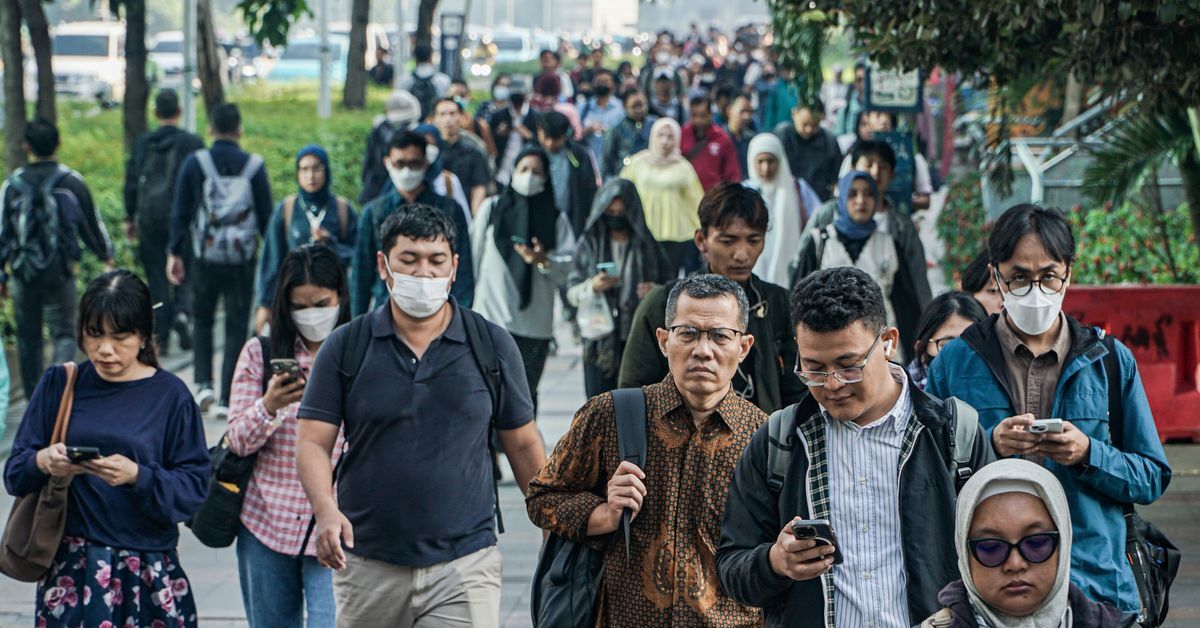
A ubiquitous sight now defines urban life across Indonesia: gig workers lined up on street corners, couriers weaving through traffic, and freelancers working on laptops from small bedrooms. They generate immense economic value, drive domestic consumption, and form the invisible infrastructure of the modern city. Yet, when it comes to labor protections, these millions of workers inhabit a precarious legal grey zone.
This is the central paradox of the platform economy. Digital technology has created job opportunities at an unprecedented speed, but it has simultaneously birthed a new strain of labor vulnerability. Workers no longer sit under a corporate roof, receive a predictable monthly salary, or enjoy clear employment contracts. Instead, they log into mobile applications, accept orders governed by opaque algorithms, and navigate earnings that fluctuate unpredictably from day to day.
Tech conglomerates routinely label these workers as "partners," while states classify them as independent contractors. In practice, however, gig workers possess little genuine autonomy. They do not set their own prices, select their clientele, control the underlying algorithms, or hold any guarantee of continued access to work. Platforms unilaterally dictate tariffs, structure incentive schemes, assign performance scores, and retain the power to deactivate accounts at will without due process.
The platform model sells the promise of ultimate flexibility. Workers can theoretically choose when and where to log on. Yet this flexibility harbors a severe structural trap: workers absorb all operational costs, income volatility, accident risks, and healthcare burdens themselves. While technology has advanced into the 21st century, labor legislation remains hopelessly anchored in the 20th century.
Traditional employment law assumes a clear binary: an employer, an employee, a fixed workplace, and set hours. The platform economy shatters every single one of these assumptions. The manager is replaced by an algorithm. The workplace becomes nomadic. The wage is rebranded as "earnings." But the fundamental reality remains unchanged: an individual is selling their labor to survive.
The power dynamic between platform and worker is profoundly asymmetric. Platforms command technology, big data, capital, and market rules. Workers offer their time, vehicles, physical labor, and skills. When an algorithm alters a fare structure or restricts account access, workers are left shouting at an invisible, unappealable digital manager. True worker protection must therefore expand beyond base pay to include algorithmic transparency. Workers have a fundamental right to know how their income is calculated and to appeal automated decisions that threaten their livelihoods.
In Indonesia, where the labor force reached nearly 155 million in 2026, over half of all workers remain trapped in the low-productivity informal sector. The Central Bureau of Statistics explicitly acknowledges that non-formal workers lack robust legal protections and minimum wage guarantees. Gig workers represent a dangerous hybridization of this crisis: they use cutting-edge modern technology, yet their social safety nets are virtually non-existent.
Framing flexibility as the ultimate perk only works if workers possess bargaining power. Without it, flexibility is merely a euphemism for shifting corporate risk onto vulnerable individuals. A healthy digital economy cannot be measured purely by corporate valuations, daily active users, or transaction volumes. The true metrics of success must be: What are the net earnings of workers after vehicle maintenance and fuel costs? How many hours must they log to survive? Are they protected when an accident occurs on the road?
To resolve this crisis, nations need a new digital social contract. Protection must follow the worker, not the employer. This requires portable social protection, where an individual holds an independent safety-net account that remains active regardless of which platform they use. Contributions can be shared proportionally among workers, platforms, and the state based on activity levels.
Furthermore, governments must establish enforceable minimum standards: guaranteed access to occupational accident insurance, basic healthcare, emergency income stabilization, transparent dispute-resolution mechanisms, and the right to collective bargaining.
The ultimate goal of regulating the gig economy is not to kill innovation or erase flexibility. It is to ensure that digital progress does not depend on systemic precarity. Technology should elevate human dignity, not reduce workers to disposable inputs in an automated machine.
This article was published on Kompas in July, 23 2026