Massive Financial Surges Fund UIN Jakarta Transition to a Smart Green Campus
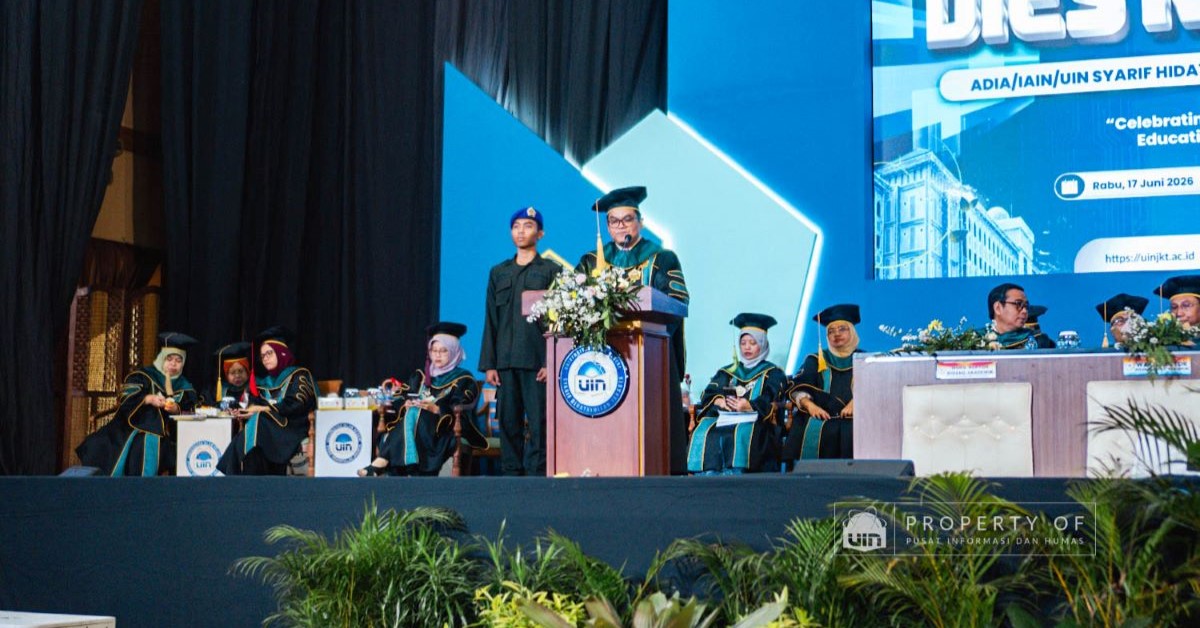
JAKARTA, Harun Nasution Auditorium – Marking a major milestone at its 69th Convocation, UIN Syarif Hidayatullah Jakarta has officially aligned its long-term academic expansion with global climate action. Under the strategic banner “Celebrating 69 Years of Promoting Inclusive and Global Higher Education in a Nurturing Eco-Technology Environment,” the university unveiled concrete structural policies designed to aggressively elevate its standing within the global UI GreenMetric World University Rankings.
To visualize UIN Jakarta’s current competitive posture across global registries, the annual report highlights the following key benchmarks:
-
UI GreenMetric World University Rankings
-
Current Global Standing: Ranked 238th Globally
-
Strategic Academic Anchor: Solar Grid Integration & Electric Transit
-
-
QS World University Rankings by Subject
-
Current Global Standing: Ranked 29th Worldwide
-
Strategic Academic Anchor: Theology, Divinity, and Religious Studies
-
-
QS Asia University Rankings
-
Current Global Standing: Ranked 801-850 Bracket
-
Strategic Academic Anchor: 44 ACQUIN-Accredited Study Programs
-
"Global institution rankings and carbon indexes are not our final destination; they serve as critical, transparent metrics," Rector Jahar stated. "They ensure that our curriculum rigor, research outputs, and financial growth are evolving within an environmentally accountable infrastructure. True campus sustainability requires a synchronized balance between high scientific velocity and a low environmental footprint."
The report revealed a massive 19.23 percent surge in Public Service Agency (BLU) revenues, which soared to Rp640.9 billion (approximately USD 39.5 million). This robust financial health gives the university the capital needed to directly fund its smart green campus transition without relying heavily on state student tuition.
Part of these funds has been funneled into expanding the zero-emission electric shuttle bus fleet across university complexes, a move heavily praised by the student body. Undergraduate student Muhammad Umar noted that the eco-friendly transport fleet has dramatically streamlined student mobility between campuses while actively lowering the university's collective carbon output.
To further minimize environmental impact and maximize student welfare, the campus is rolling out decentralized water-filtration stations to eliminate single-use plastics, alongside the upcoming construction of a pedestrian overpass engineered to optimize municipal traffic flow and maximize pedestrian safety.
The operational execution of this green strategy will be managed through the university's expanding science and research networks. In 2026 alone, the university generated 124 Scopus-indexed research publications, with a growing percentage dedicated to environmental science, sustainable chemistry, and eco-theology.
(Mufid/Zaenal/Arifin/Photo: Azka Raysa Pratama)