MABIMS Adopts 10 Khairu Ummah Resolutions to Strengthen Regional Islamic Cooperation
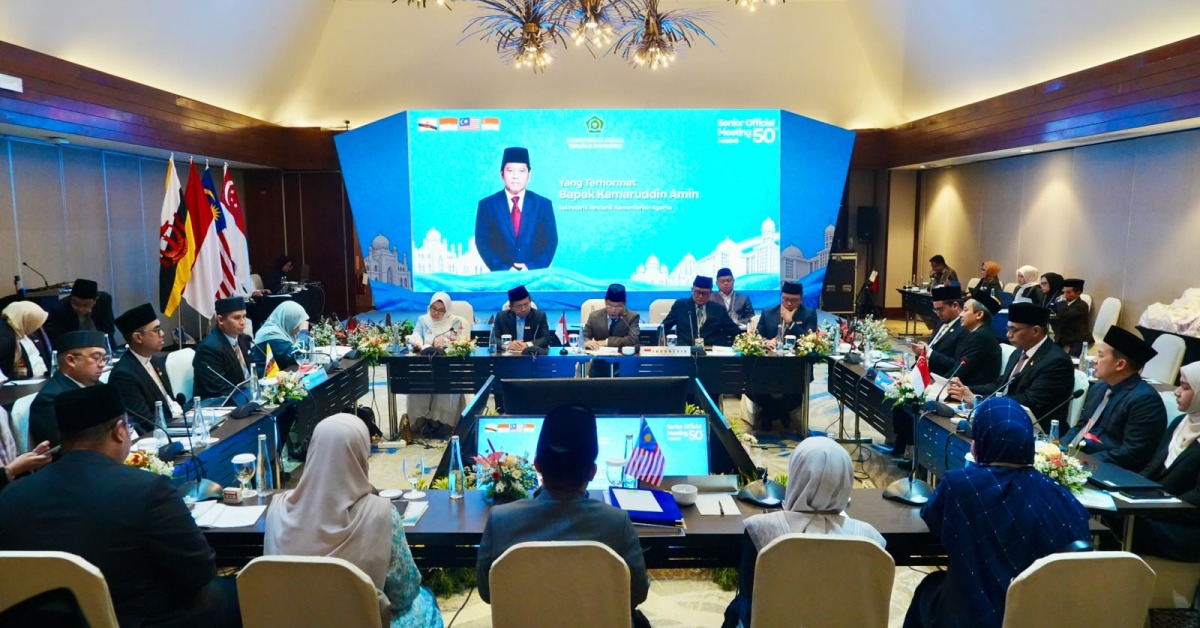
Jakarta, UIN News Online – The 50th Senior Officials Meeting (SOM) of MABIMS, comprising the Ministers of Religious Affairs of Brunei Darussalam, Indonesia, Malaysia, and Singapore, has adopted 10 Khairu Ummah resolutions as a shared framework for building a more inclusive, ethical, and civilized Muslim society. The resolutions address a broad range of priorities, including Muslim family development, inclusive Islamic education, religious workforce capacity, artificial intelligence (AI), economic empowerment, and regional academic collaboration.
Secretary General of Indonesia's Ministry of Religious Affairs, Prof. Dr. Phil. Kamaruddin Amin, M.A., emphasized that the resolutions must translate into concrete initiatives to ensure that their benefits reach communities across member countries.
"To strengthen solidarity and foster meaningful cooperation among member countries, we hope our existing partnerships will go beyond agreements on paper and be translated into concrete programs that deliver tangible benefits to society," Kamaruddin said at the closing of the 50th SOM MABIMS in Jakarta on Tuesday (11/03/2026).
The 10 resolutions agreed upon by MABIMS member countries establish shared priorities for strengthening Muslim communities and advancing regional cooperation.
-
Strengthening the Khairu Ummah Paradigm. Promoting the practice of Khairu Ummah as a foundation for civilization rooted in the objectives of Islamic law (maqasid al-shariah), religious moderation (wasatiyyah), tolerance, inclusivity, and social responsibility.
-
Reinforcing the Foundations of Muslim Family Development. Strengthening the strategic role of families as the primary foundation for character formation and civilization, the protection of life and lineage, and responsible wealth management based on maqasid al-shariah through cross-country collaboration.
-
Developing Inclusive Islamic Education. Improving the quality of Islamic education to meet contemporary needs through child-friendly approaches, character development, compassion-based curricula (rahmah), critical thinking, and preparation for younger generations to navigate changing times.
-
Enhancing the Capacity of Religious Personnel and Youth. Providing continuous training in digital literacy, alongside the application of technological ethics and human-centered artificial intelligence to prioritize public welfare and protect vulnerable groups.
-
Establishing Ethical Guidelines for AI Use. Developing guidelines to safeguard institutional integrity, with particular emphasis on data verification and human oversight, especially in religious research and the formulation of Islamic legal rulings (istinbat) by authorized religious institutions.
-
Strengthening Professionalism in Religious Outreach and Services. Improving the integrity of preachers, religious speakers, and religious affairs officers in responding to developments in the digital sphere, while promoting transparent, accountable, and effective religious service governance.
-
Strengthening the Halal Ecosystem and Islamic Social Finance. Expanding regional cooperation in halal industry development, improving certification standards, and optimizing the productive management of zakat, waqf, and other Islamic social finance instruments.
-
Developing Zakat Management and Empowering Asnaf. Strengthening regional cooperation in zakat management through beneficiary profiling, the establishment of adequacy thresholds, and the transformation of basic assistance into capacity-building programs, skills training, and entrepreneurship development.
-
Empowering Asnaf and Vulnerable Communities. Developing economic and social empowerment programs for asnaf and vulnerable groups through the provision of basic necessities, skills training, and wider access to economic opportunities to achieve sustainable independence.
-
Strengthening Regional Collaborative Education. Expanding research partnerships, academic exchanges, and knowledge development among religious universities across MABIMS member countries to address contemporary challenges.
In addition to the 10 resolutions, the meeting agreed on four strategic priorities for the 2026–2030 period, outlined in a joint Strategic Focus Calendar: Youth Potential; Education and Beneficial Religious Life; Socioeconomic Harmony; and Regional Harmony.
UIN Jakarta Hosts Regional Exchange of Best Practices
As part of the 50th SOM MABIMS program, UIN Syarif Hidayatullah Jakarta, in collaboration with the Ministry of Religious Affairs' Bureau of Legal Affairs and Foreign Cooperation (HKLN), organized an academic seminar titled Khairu Ummah: Sharing Best Practices in Building a Civilized Muslim Society. The seminar took place at Hotel Sari Pacific, Jakarta, on Monday (11/02/2026).
The forum brought together speakers from all four MABIMS member countries to share their respective approaches to building Khairu Ummah, focusing on family development, education, economic empowerment, and the responsible use of artificial intelligence.
In his opening remarks, Secretary General Kamaruddin Amin described the seminar as an opportunity for member countries to learn from one another and exchange experiences in developing their respective Muslim communities.
"Khairu Ummah refers to the best community, a socio-religious vision that we are collectively striving to realize. Through this forum, representatives from the four countries have shared the best practices implemented in their respective national contexts," he said.
Brunei Darussalam presented its approach to strengthening family resilience as the foundation of a civilized Muslim society, delivered by Dr. Dayang Hajah Siti Juriah of Universiti Perguruan Ugama Seri Begawan.
Indonesia was represented by UIN Jakarta Rector Prof. Asep Saepudin Jahar, who presented a paper titled Beneficial Education and Religious Life: Indonesia's Best Practices amid Multidimensional Disruption.
Malaysia was represented by Ustazah Zuraini Binti Yahaya of the Department of Islamic Development Malaysia (JAKIM), who discussed socioeconomic harmony and Muslim economic empowerment.
Meanwhile, Singapore's contribution came from Ustaz Abdul Hafiz Latiff of the Islamic Religious Council of Singapore (MUIS), who explored a human-centered approach to addressing the challenges and opportunities arising from artificial intelligence.
Kamaruddin expressed hope that the exchange of experiences would lead to practical collaborations that could be adapted and implemented across the four countries.
UIN Jakarta's involvement in organizing the seminar followed an earlier meeting between UIN Jakarta Rector Asep Saepudin Jahar and Minister of Religious Affairs Nasaruddin Umar at Istiqlal Mosque on Friday (October 23, 2026). During the meeting, the minister highlighted the importance of involving higher education institutions in the Ministry's international initiatives, in accordance with each institution's expertise and capacity.
Rector Asep Jahar expressed his appreciation for the Ministry's trust in UIN Jakarta. Preparations for the seminar were subsequently carried out through coordination with the Ministry's Bureau of Legal Affairs and Foreign Cooperation.
He noted that hosting the forum was also an opportunity for UIN Jakarta to strengthen its contribution to religious diplomacy, knowledge exchange, and regional academic partnerships. These efforts align with MABIMS' broader commitment to strengthening collaborative education among religious higher education institutions across the region.
Strengthening Regional Cooperation
The 50th SOM MABIMS took place in Jakarta from November 1–3, 2026. The Indonesian delegation was led by Kamaruddin Amin, while Brunei Darussalam was represented by a delegation led by Awang Haji Shamshol bin Haji Omar. Malaysia's delegation was headed by Muhyidin bin Aziz, and Singapore's delegation was led by Kadir Maideen bin Mohamed.
During the meeting, member countries also agreed to revise the MABIMS Membership Guidelines, including provisions governing the participation of observer and associate countries. The revised guidelines are expected to be finalized ahead of the 51st SOM and the 22nd MABIMS Meeting, scheduled to take place in Brunei Darussalam in 2027.
Through the 10 Khairu Ummah resolutions and the exchange of national best practices, MABIMS reaffirmed its commitment to strengthening regional solidarity and cooperation. UIN Jakarta's involvement in the academic forum further demonstrates the role of higher education institutions in supporting regional religious diplomacy, advancing knowledge exchange, and contributing to the development of a more inclusive and resilient Muslim society.