
LKBH FSH UIN Jakarta Advocates for Enhanced Public Transportation Safety Supervision


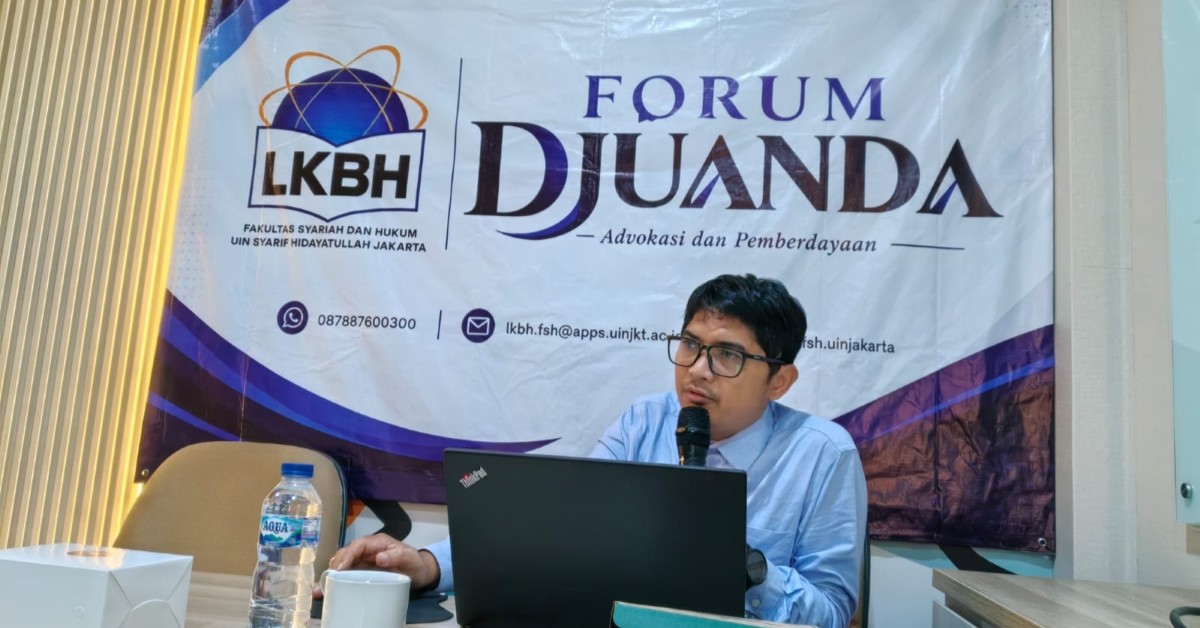
Ciputat, UIN News Online – The Legal Consultation and Aid Institute (LKBH) of the Faculty of Sharia and Law (FSH) UIN Syarif Hidayatullah Jakarta is pushing for the strengthening of public transportation safety oversight. Through a discussion forum themed “Public Transformation Law: Guaranteeing Citizen Safety, Preventing Recurring Disasters”, this idea was presented at the Djuanda Forum held at the LKBH Office, 1st Floor of the FSH Building, on Monday (September 21, 2026).
The forum discussed legal efforts to guarantee the safety of citizens and prevent recurring transportation accidents. Furthermore, the forum also encouraged the implementation of safety ratings and safety rights as part of strengthening the oversight of public transportation safety.
Vice Chairman of LKBH FSH UIN Jakarta, Subhan Ansori, S.H., M.H., as a speaker at the forum, stated the need for transportation mode oversight based on risk levels, rather than solely relying on actions after an accident has occurred. According to him, the state needs to intervene as soon as potential safety risks are identified.
“Citizens have the right to be safe while using transportation modes. The state must oversee transportation modes through intervention measures before accidents happen,” said Subhan.
Based on this, Subhan assessed the need for the implementation of a safety rating, which is a useful instrument for the public to know the safety level of the transportation mode being used. This information, according to him, needs to be followed up by regulators with concrete actions for the sake of passengers' lives.
“If the safety rating drops, oversight should be tightened; operators must be obliged to make improvements, limit operations, or even temporarily halt operations if there is a critical risk,” he explained.
In addition to safety ratings, Subhan encouraged the fulfillment of safety rights as the public's right to obtain information regarding transportation safety conditions. Operators, he said, need to disclose safety indicators periodically to users, while regulators must ensure every risk is followed up before developing into an accident.
“So, the safety right is the right of citizens to know and demand safety,” stated Subhan.
On the other hand, Subhan assessed that rule enforcement against operators failing to meet safety provisions still needs to be strengthened. Besides imposing sanctions, he also encouraged the provision of incentives for operators who consistently meet safety standards.
“Regulators need to consider incentives for operators who obey the rules by providing rewards to operators committed to guaranteeing passenger safety,” he said.
A number of transportation accidents in land, sea, and air modes demonstrate the importance of evaluating safety regulations and oversight mechanisms. These various incidents serve as a momentum to strengthen the protection of the public as public transportation users through preventive measures as soon as safety risks are identified.